
Official home of the Lincoln County Authority of Tourism (LCAT)
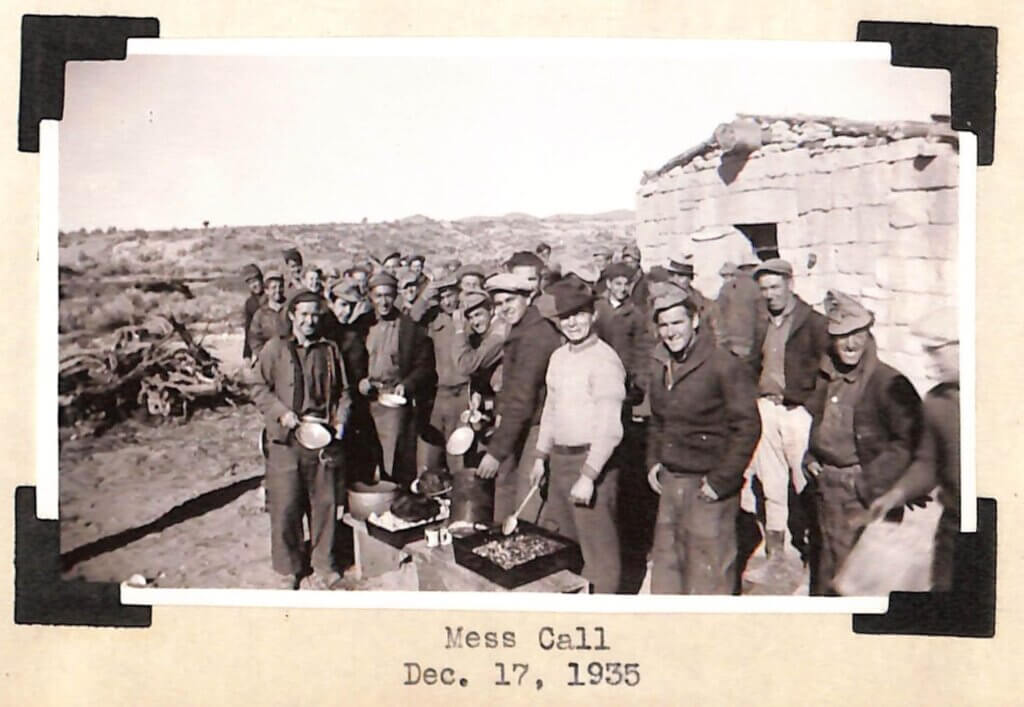
In the 1930s, the Great Depression gripped the American West, but in Lincoln County, Nevada, the era brought a surge of activity that would permanently reshape the region’s landscape. The arrival of the Civilian Conservation Corps (CCC)—referred to locally as the “CC boys”—was more than a federal relief program; it was a defining social and structural event for the county. While their headquarters were anchored near Panaca, their labor radiated outward into the surrounding hills and summits, taming a harsh environment and laying the foundation for the region’s recreational future.
The heart of the CCC’s operations in Lincoln County was a camp established near what is now Pioneer Park in Panaca. This was no temporary camp; it was a fully functioning village featuring barracks, officers’ quarters, a recreation hall, and a large barn for maintaining a fleet of trucks.
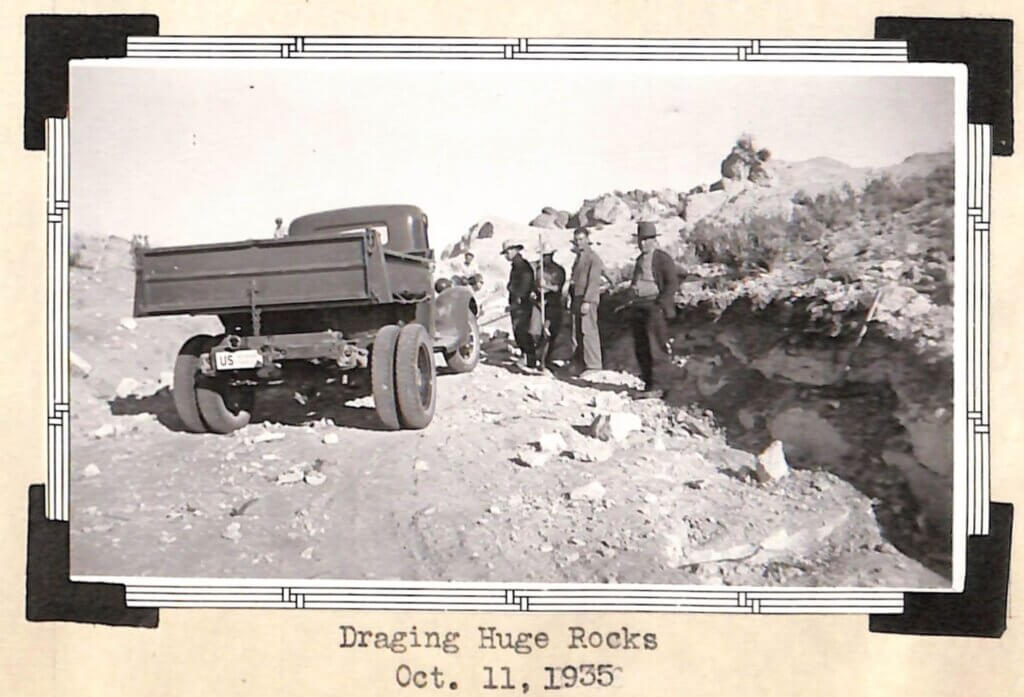
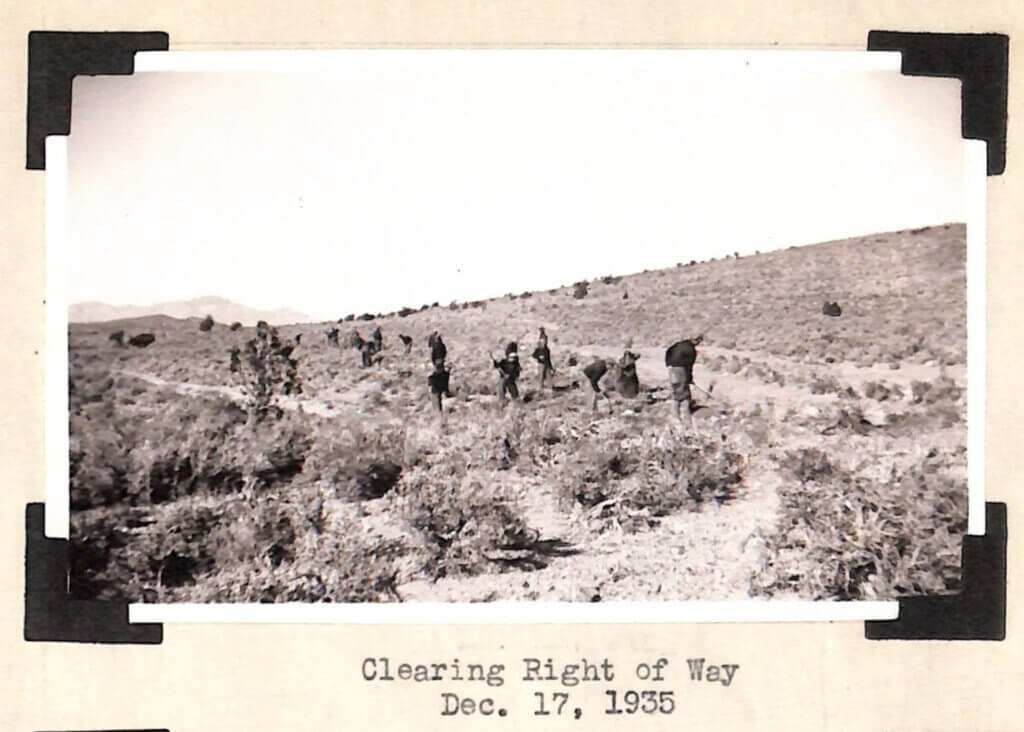
The camp’s presence rippled through the local economy. Jay Wadsworth, a resident of nearby Caliente, recalled the logistics required to support such a large group of men in the high desert. His father harvested ice from frozen reservoirs during the winter to sell to the CCC workers stationed as far out as Caliente Summit during the blistering summer months, ensuring they had cold water and preserved food while working on distant road and conservation projects. The corps’ work extended well beyond the town limits, reaching into the critical mountain passes that connected the county’s scattered communities.
The most critical contribution of the CCC to Lincoln County was its mastery of the area’s volatile hydrology. For generations, the residents of Panaca lived in fear of cloudbursts—violent storms in the eastern mountains that would send torrents of water rushing down the ravines. These floods would turn Main Street into a river, with water levels sometimes breaching the tops of fences.
The CCC executed a massive, county-level engineering project to solve this. They didn’t just build a wall; they re-engineered the watershed. High in the hills east of Panaca, far from the town center, the men constructed a vast network of “check dams.” These were ingenious structures built from native materials—cedar posts, wire, and rocks—designed to slow the velocity of the water before it could gather destructive force.
Closer to civilization, they constructed a massive flood control dike stretching for miles, complete with drop structures to manage the water’s energy. The success of this infrastructure was absolute. Decades later, residents like Frank Ernst and Lorene Mathews noted that the town had not suffered a major flood since the “CC boys” finished their work, a testament to the durability of their engineering.
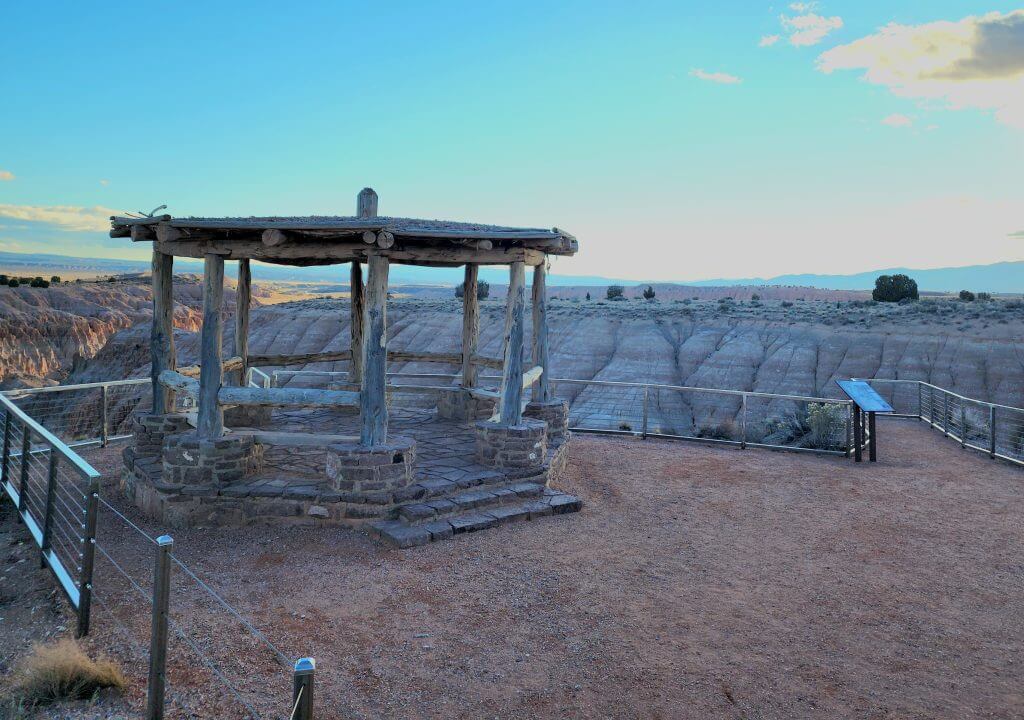
Beyond protection, the CCC was instrumental in developing Lincoln County’s recreational identity. Just a few miles from their main camp lay Cathedral Gorge, a geologic wonderland of bentonite clay spires. The corpsmen transformed this raw landscape into a state park for the public.
Grayce McBride recalled the specific contributions the men made to the park, including the construction of a distinct rock water tower and a “remuda” (a willow structure). They developed a water system for the park, likely digging a well or piping water to support visitors. Their work culminated in the dedication of Miller Point, a scenic overlook that remains a key attraction in the county today. These efforts effectively formalized tourism in the area, turning a local curiosity into a protected state landmark.
The impact of the CCC was as much social as it was physical. In a county characterized by isolated, tight-knit communities, the influx of hundreds of young men from across the country—places like Kentucky, Ohio, and Indiana—was a cultural shock that turned into a deep integration.
The “CC boys” became a staple of social life in Lincoln County. They were regular guests in local homes, spending winter evenings playing guitars, singing songs like “Beautiful Brown Eyes,” and making candy with local families. This integration often blossomed into romance. A significant number of local women married corpsmen, weaving the lineage of the CCC into the very DNA of Lincoln County families. Grayce McBride listed several such unions, including her sister Evelyn, who married a boy from Indiana, and the Phillips and Wadsworth girls, who married men from Kentucky and Ohio.
When the CCC program eventually wound down, they left behind more than memories. Their physical infrastructure became the backbone of the community’s survival in times of crisis. When the Panaca grade school burned down in 1943, the town avoided educational collapse by repurposing the sturdy CCC barracks into classrooms. Grades were doubled up in the barracks—third and fourth together, fifth and sixth together—keeping the school system alive until a new facility could be built.
Other buildings were moved and repurposed for civic duty. One CCC building was transported to Main Street to serve as the fire hall, while another section became the town hall. The volunteer fire department, vital to the town’s safety, held its meetings in a classroom carved out of a former CCC structure.
From the flood-safe streets of Panaca to the scenic overlooks of Cathedral Gorge and the family trees of local residents, the Civilian Conservation Corps didn’t just work in Lincoln County; they rebuilt it. They provided the labor that tamed the desert floods and the new blood that revitalized the community, leaving a legacy that is still visible in the county’s landscape and people today.
This narrative was developed using oral histories preserved by the Lincoln County Town History Project. Individual accounts were compiled and synthesized into a single story with the assistance of Google Gemini. It was reviewed and edited by the Lincoln County Authority of Tourism (LCAT) for accuracy and clarity. Historic photos obtained by “Forgotten Nevada” through CCC Division Reports national archives.